
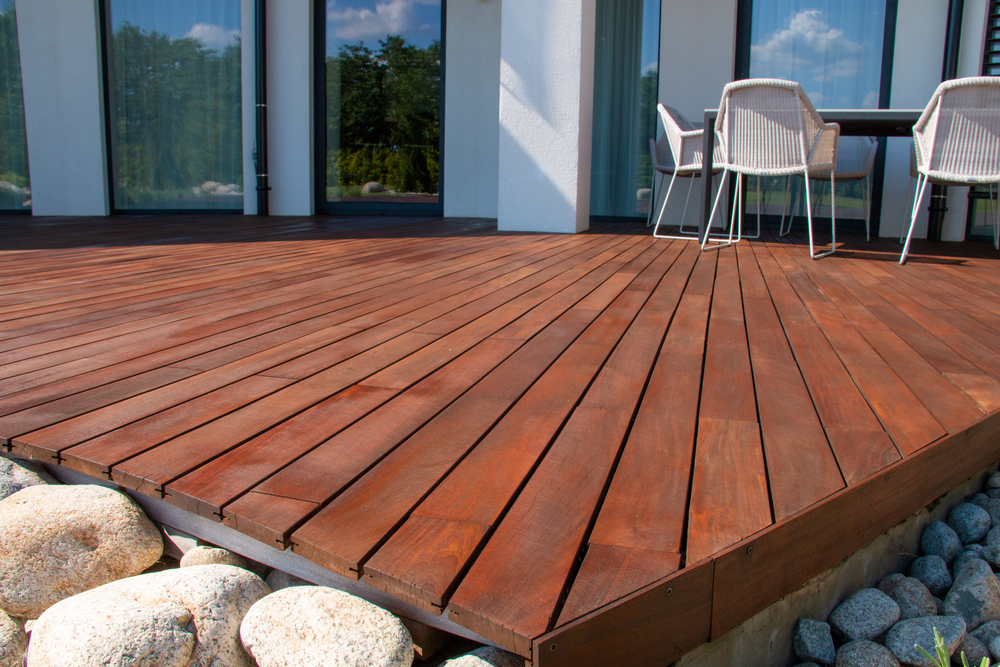
The honest answer is by condition, not calendar: most wood decks in full Central Texas sun need refinishing every two to three years, shaded decks can go longer, and the water test tells you for certain regardless of how long it’s been. Staining isn’t cosmetic here. It’s the barrier between your boards and the sun-then-rain cycle that ages wood faster than almost anywhere.
Here’s how to know when yours is due, and what it costs to keep putting it off.
Why Austin decks need it more often
Most staining advice comes from milder climates and undersells the schedule badly for Texas. Here the sun does months of hard UV damage that dries boards and breaks down finish, and then heavy rain soaks into everything the sun opened up. A deck with intact stain and sealer sheds that water and blocks most of that UV; a deck without it absorbs both, and the damage moves from the surface into the wood.
That cycle is why a Central Texas deck runs through its finish faster than the label suggests. Product timelines written for the national average are optimistic here.
The water test beats any schedule
Forget counting years and pour a cup of water on a board. If it beads up and sits on the surface, your finish is still working and you can wait. If it soaks in and darkens the wood within a minute or two, the finish has failed and the deck is drinking rain every time it storms. That’s the whole test, and it’s more reliable than any calendar because it measures the thing that actually matters: whether water is getting in.
Do the test in a few spots, because sun exposure varies across a deck. The west-facing edge usually fails first.
What sets your deck’s real interval
Sun exposure is the biggest factor. A deck baking in full afternoon sun needs attention noticeably sooner than one under shade or a cover. The wood matters too: pressure-treated pine and cedar weather differently. And the previous finish matters, because some products simply last longer than others in this climate. That’s why we go by the water test on your specific deck rather than quoting a fixed number that would be wrong for half of them, and it’s part of what our staining service settles on the first visit.
What skipping it actually costs
This is where the calendar gets expensive. Skip one cycle and you’re usually fine; the finish has some margin. Skip several and the sequence begins: the surface grays and roughens, then splinters, then water starts entering the boards through the cracks the sun opened. Once water is in the wood regularly, you move from a refinishing job to a board-replacement job, and eventually toward repair if it reaches the frame.
The math is unforgiving. A refinish on schedule is the cheapest maintenance a deck asks for. The repairs that follow years of skipping it cost multiples more, and no finish brings a rotted board back. You’re not choosing between staining and saving money; you’re choosing between staining now and paying more later.
Does new wood get stained right away?
No, and doing it too early is a common mistake. Fresh pressure-treated lumber arrives wet with treatment and has to dry before it can absorb stain properly, which can mean waiting weeks or months depending on conditions. Seal it too soon and the finish won’t bond, so you pay for a job that fails early. The water test works here too, in reverse: when new wood starts absorbing water rather than repelling the mill glaze, it’s ready.
Can you stain a composite deck?
No, and you don’t need to. Composite, including Trex and TimberTech, doesn’t take stain and doesn’t need the protection wood does; it just needs cleaning. Anyone offering to stain your composite deck is selling a service the material can’t use. If your deck is composite and looking tired, a wash is almost always the whole answer.
Frequently asked questions
How do I know for sure it’s time?
The water test. Beads means wait; soaks in means it’s due. It’s more reliable than any number of years because it measures whether water is actually getting into the wood.
Can I just stain the parts that look worn?
You can spot-treat, but the finish will look uneven and the untreated areas keep aging. On a deck that’s due, refinishing the whole surface gives even protection and a consistent look that patching won’t.
Does a more expensive stain last longer?
Often, but not always, and application matters as much as product. Proper prep, dry wood, and full coverage of edges and end grain do more for longevity than price alone.
Is power-washing before staining a good idea?
Cleaning first is essential; over-powering it is a mistake. Too much pressure tears the soft wood and leaves marks that show through the finish. Lower pressure and the right cleaner prepare the surface without damaging it.
Time to protect that deck?
Schedule a deck estimate or call 737-363-4018. Tell us the wood and the sun it gets, and we’ll tell you honestly where it stands.