
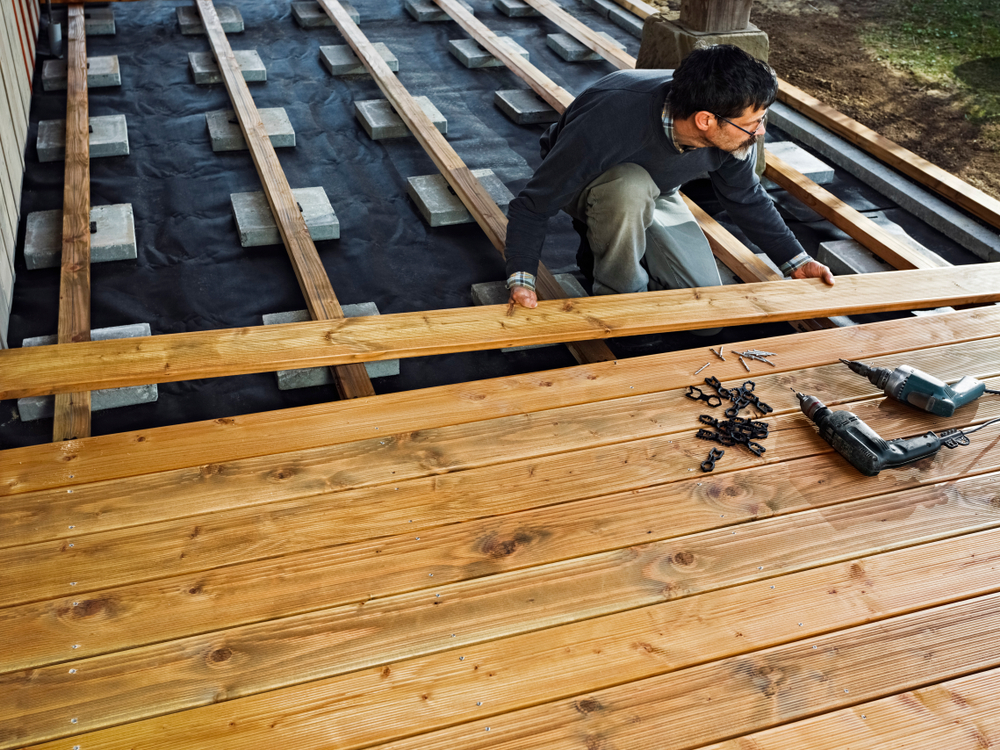
The honest answer is a range, because five things drive the price: the size of the deck, the material, how high off the ground it sits, how complicated the site is, and the extras you add. Two decks with the same square footage can differ in cost substantially once those factors are in the picture, which is why a real number always comes from seeing the space, not from a chart.
This guide explains what moves the price, so you can budget sensibly before anyone visits.
Size is the starting point, not the whole story
Square footage is where every estimate begins, because it sets the materials and the labor. A bigger deck costs more; that part is obvious. What surprises people is that cost per square foot isn’t fixed. A small deck can cost more per square foot than a large one, because the fixed parts of the job, permits, mobilization, stairs, don’t shrink in proportion. So doubling the size rarely doubles the price, and halving it rarely halves it.
Use size to get in the right ballpark, then let the factors below move you within it.
Material is the biggest single lever
Nothing moves a deck’s price like what it’s built from. Pressure-treated pine is the most affordable, which is why it’s the workhorse of the industry. Cedar costs more and buys appearance and natural decay resistance. Composite, including Trex and TimberTech, costs the most up front and the least afterward. Hardwood sits at the top for both cost and longevity.
The gap between the cheapest and most expensive material choice can change the total meaningfully on the same footprint, so this is the first decision worth thinking through honestly. We lay out the trade-offs on the wood and composite pages if you’re weighing them.
Height and access change the structure underneath
A deck sitting a step off the ground and a deck raised a full storey are different structures, even at the same size. Height adds taller posts, more substantial framing, railings that become mandatory, and stairs, each of which adds cost. It also affects how the crew works and how long the build takes.
Access matters alongside height. A backyard a crew can walk materials straight into costs less to build in than one reached only through a narrow side gate or across a slope, simply because the work takes longer.
Site complexity is the factor people forget
A flat, open, easy lot is the cheap case. Real Austin lots often aren’t that. A slope means stepped levels or taller footings. Limestone close to the surface, common around here, makes digging footings harder. Mature trees to build around, drainage to respect, an old deck to tear out and haul away first: each adds to the number. None of these are visible on a plan drawing, which is exactly why an on-site look prices a deck accurately and a phone call can’t.
The extras that add up
Beyond the deck itself, the features you choose move the total. Built-in seating, planters, and covered sections add materials and labor. Lighting adds an electrical dimension. Premium railing styles cost more than standard ones. Multiple levels multiply the structure. None of these are wrong to want, they’re often what makes a deck yours, but each is a line on the estimate, and a good builder shows you which ones cost what so you can choose with open eyes.
Why we don’t publish a price-per-square-foot here
Because it would be a number you couldn’t trust. A single figure would be wrong for most decks the moment the sun, the slope, or the material changed, and quoting one would just set you up for a surprise later. What you actually want is a written, itemized number built from your specific project, which is what our estimate process produces, and it comes from a site visit for exactly the reasons this guide lays out.
Anyone who gives you a firm deck price over the phone, before seeing your yard, is guessing. The number might be low to win the job and climb later, or high to be safe. Neither helps you budget.
How to budget sensibly before you call
Start with size for the ballpark, pick a material lean based on your maintenance appetite, and be honest about your site, is it flat and open, or sloped and tight? Then add the extras you actually want, not the ones from a magazine. That gives you a realistic budget frame to bring to an estimate, and a good builder will tell you honestly where your expectations and your budget agree, and where they don’t.
Frequently asked questions
Why won’t you just tell me a price per square foot?
Because it would be wrong for most decks and misleading for all of them. Per-square-foot pricing ignores height, slope, material, and access, the factors that actually move the cost. We’d rather give you a real number from a real look than a tidy figure you can’t rely on.
Is a bigger deck cheaper per square foot?
Often, yes. The fixed costs of a job spread over more area, so cost per square foot usually drops as size rises. It’s one reason building the deck you’ll want in five years can beat building small now and extending later.
What’s the cheapest way to get a good deck?
A well-built pressure-treated deck on a simple footprint, kept to the size you need and the features you’ll use. Cheap comes from restraint and good building, not from cutting structural corners, which always costs more later.
Does tearing out an old deck add much?
It adds demolition and haul-off, which are real line items. Whether it’s significant depends on the old deck’s size and construction. It’s priced as its own part of the scope so you can see it.
Ready for a real number?
Schedule a deck estimate or call 737-363-4018. We’ll look at your space and give you a written, itemized figure you can actually budget around.