
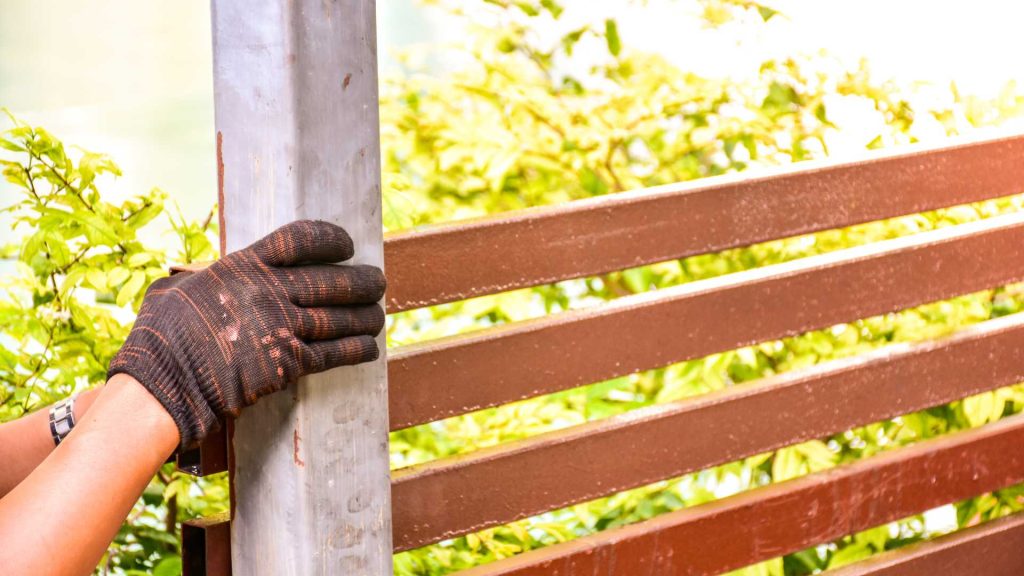
A wobbly deck railing is a real safety issue, not a cosmetic annoyance, because a railing exists to stop people going over an edge. The usual causes are loosened fasteners, a corroded or under-built post connection, or rot where the post meets the deck. Some of it a homeowner can safely check and even fix; some of it is structural and belongs to a professional. This guide draws that line clearly.
First, treat it as a safety issue
Before diagnosing anything, change how you use the deck. A railing that moves might not hold a real load, a person leaning hard, a child pushing against it, someone catching their balance, so until it’s sorted, keep people from leaning on it and keep kids away from that section. That’s not alarmism; railings are a fall-prevention system, and a moving one is a system that’s telling you it might fail. Treating it seriously for a few days while you sort it out costs nothing and is simply the right call.
Why railings come loose
A few causes account for most wobbly railings. Fasteners work loose over years of expansion, contraction, and use, especially if nails were used where structural screws or bolts belong. The post-to-deck connection may have been under-built from the start, relying on too few fasteners or the wrong hardware. Corrosion weakens the connection where the wrong metal met treated lumber or where water reached it. And rot can compromise the post base or the deck framing it attaches to, which is the most serious cause because the wood itself is failing, not just the fastener. The cause determines whether it’s a simple fix or a real repair, which is exactly why finding the cause comes before any fixing.
What you can safely check yourself
From the surface, without going under the deck, you can learn a lot. Push the railing at several points and notice where the movement is: does the whole run move, or one post? Look at the base of the offending post where it meets the deck, is the wood there firm, or soft and dark? Check whether you can see the fasteners, and whether any are visibly backed out, missing, or rusted. Press the post base and nearby deck boards with a screwdriver; if the wood gives easily, that’s rot, and that changes everything. This is checking, not fixing, and it tells you which of the next two sections you’re in.
What a homeowner can reasonably fix
If, and only if, the wood is sound and the problem is simply a fastener that’s backed out, tightening or replacing that fastener with the correct structural screw is a reasonable homeowner job. A railing that firms up completely when a loose bracket is re-secured into solid wood was a maintenance issue, not a structural one. The test is honest and simple: after you tighten it, does it feel genuinely solid, or just less loose? Solid means you’ve fixed it. Still-moving, or moving again within weeks, means the problem is deeper than a fastener and you’ve reached the boundary of DIY.
Where it stops being a DIY job
Some causes are not homeowner fixes, and pretending otherwise is dangerous. Any rot in the post, the post base, or the deck framing it connects to means the fix involves structural repair, not tightening. A connection that was under-built needs re-engineering, not just re-fastening. And a whole railing run that moves together usually points at the ledger or rim the posts attach to, which is structural. In these cases the honest move is a proper repair, because a railing that only seems fixed is more dangerous than one that obviously wobbles, since people trust it. If you can’t tell which situation you’re in, that uncertainty is itself the answer: have it looked at.
When to get it inspected rather than guess
If the railing wobble comes with other signs, soft wood anywhere, movement you feel in the deck itself, or you simply can’t determine the cause from the surface, an inspection settles it. A written condition report tells you whether you’re dealing with an isolated fastener or a symptom of something structural, and on a fall-prevention component that certainty is worth having. It’s a small step that either buys you peace of mind or catches a real problem before someone leans on it at the wrong moment.
Frequently asked questions
Is a wobbly railing actually dangerous?
Yes, potentially. Railings exist to stop falls, and a loose one may not hold under real force, exactly when someone needs it to. Treat it as a safety issue until you know the cause, and keep people from leaning on it meanwhile.
Can I just tighten the screws?
If the wood is sound and a fastener has backed out, yes, that’s a reasonable fix, and it should leave the railing genuinely solid. If it still moves after tightening, or the wood is soft, the problem is structural and tightening won’t solve it.
Why did it come loose in the first place?
Usually years of movement working fasteners loose, an under-built original connection, corrosion, or rot. In Austin’s climate, moisture reaching the connection accelerates all of these.
Should the whole railing be replaced?
Not necessarily. An isolated loose post is often a targeted fix; a railing that’s failing along its length, or attached to compromised framing, may need more. An inspection tells you which, so you’re not over- or under-doing the repair.
Not sure how serious it is?
Schedule a deck estimate or call 737-363-4018. Describe what’s moving, or send a photo, and we’ll tell you honestly whether it’s a tighten-it fix or a real repair.