
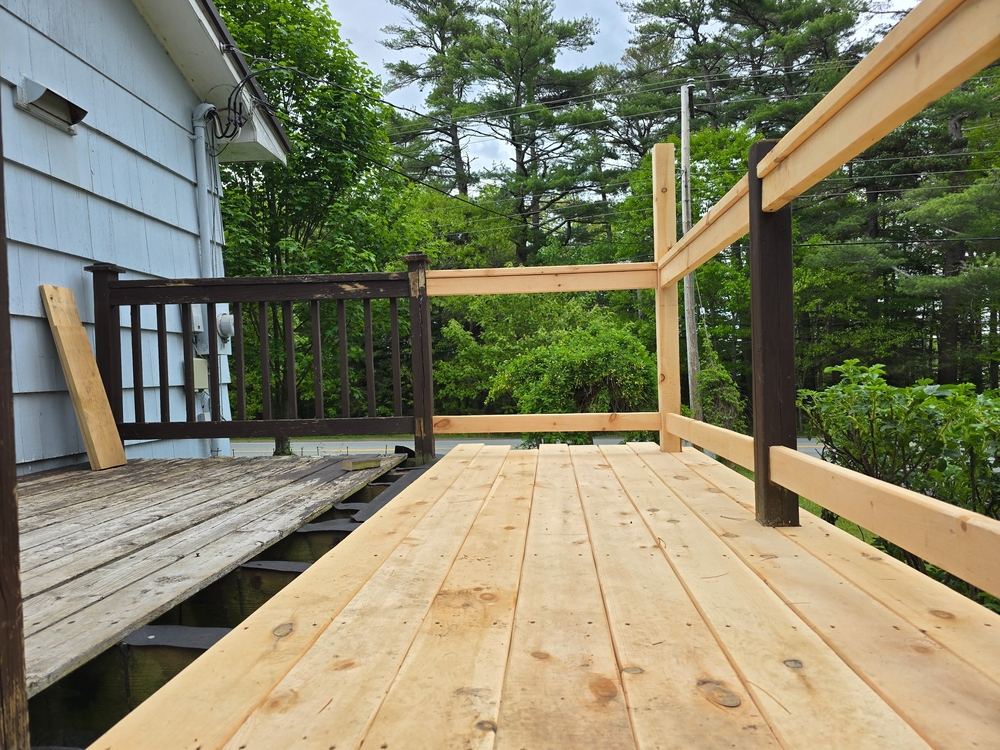
You can safely check five things on your own deck from the surface: the railings, the stairs, the boards underfoot, the spot where the deck meets the house, and the base of any post you can reach. That’s the whole homeowner check, and it takes about ten minutes.
Everything below the deck’s surface is a professional’s job, and this post will tell you exactly where that line falls.
Before you start: what this check is and isn’t
This is a triage walk-around, not an inspection. Its purpose is to catch changes early and tell you whether to book someone, not to certify that your deck is sound. A deck can pass every item here and still have problems in the frame, which is why decks over ten years old deserve a professional look underneath regardless of how they feel from above.
Do this check twice a year if you can. Spring, before the deck gets used hard, and autumn, after a summer of sun, is a sensible rhythm in Central Texas.
Railings and guards
Lean into the railing with your hip, firmly, at several points along its length, especially at corners and at the top of stairs. It should not move. A railing that shifts, flexes noticeably, or knocks against its post has a connection problem, and railings are what stop people going over an edge.
Also look at the balusters, the vertical pieces: any that are loose, cracked, or missing are worth flagging, particularly if children use the deck.
What it means: a moving railing is a stop-leaning-on-it item today and a call this week.
Stairs
Walk them slowly, both directions. Every step should feel identical underfoot; the moment one feels different, something has moved. Look for treads that flex, stringers pulling away from the deck, a wobbly handrail, or a bottom step that has sunk relative to the ground.
Stairs cause a disproportionate share of deck injuries because they concentrate weight and movement in one small structure.
What it means: any movement in stairs earns a call. A step that visibly sags or a stringer separating from the deck means keep people off them until someone looks.
The walking surface
Walk the whole deck, including the edges and the corners people rarely stand in. You’re feeling for softness or give, and looking for boards that are cupping, splitting badly, or splintering, plus any fastener heads standing proud of the surface.
Then look at color and water. Dark patches that stay dark for days after rain, or spots where water pools rather than draining, mark places where moisture is living permanently in the wood.
What it means: cosmetic wear is a maintenance conversation, often a staining and sealing job. Softness underfoot is different: that’s a call.
Where the deck meets the house
Stand at the house wall and look at the joint. You want to see a clean connection, with flashing visible above the ledger board where the deck attaches. Warning signs are a visible gap opening between deck and wall, rust stains bleeding from the connection, soft or discolored siding just above the deck, or doors onto the deck that have started to stick.
This is the most safety-critical connection on a deck, which is why it gets its own item even though you can only see part of it.
What it means: any of those signs is a stop-using-the-deck-and-call-today item. Not next week.
Post bases, where you can reach them
If you can safely reach a post base without going underneath the deck, look at where it meets the ground or its footing. You want the post sitting on something, not in the dirt, and you want the wood dry and firm. Press the base with a screwdriver; if it sinks in easily, the wood is rotted.
Stay out from under the deck. Crawling beneath a structure you already suspect is exactly the wrong move, and it’s where a homeowner check turns into a hazard.
What it means: soft post bases mean the deck’s support is compromised. Book someone before the next gathering.
What to do with what you find
Write it down with photos on your phone, including the date. That record turns a vague worry into a useful conversation and lets anyone who looks at the deck see what changed and when.
Then match it to the thresholds above. Cosmetic issues go on the maintenance list. Movement, softness, or anything at the house connection means a professional look, and a written condition report is the version that tells you what everything you found actually means.
If more than one item on this list came back concerning, keep the deck out of use until it’s been looked at. It costs you a weekend of the deck; the alternative costs more.
Frequently asked questions
How do I know if it’s serious enough to stop using the deck?
Use this rule: anything involving movement you can feel, softness in the wood, or the connection to the house means stay off until it’s inspected. Cosmetic problems don’t.
Can I just tighten the loose railing myself?
Tightening a visible fastener is reasonable. If the railing still moves after that, the problem is in the connection, and the fix isn’t a tightening job. That’s the point where it becomes someone else’s work.
Is an old deck automatically unsafe?
No. Plenty of well-built older decks are perfectly sound, and plenty of newer ones aren’t. Age is a reason to look, not a verdict.
What if I find nothing at all?
Then you’ve spent ten minutes and gained real peace of mind. Put a reminder in the calendar for six months and enjoy the deck.
Found something you’d rather not guess about?
Schedule a deck estimate or call 737-363-4018, and we’ll come look properly.